
Our Perspective
An Ancient Italian Heritage
Ancient Roots & the Age of the Caesars
The Lagotto’s story begins with Italy’s long tradition of working water dogs. Breed historian Dr. Giovanni Morsiani describes Etruscan hunting and fishing depictions at Spina that resemble today’s Lagotto, and a water-dog tradition continuing through Roman and medieval times. These connections place the breed’s proposed ancestry in the world of ancient Italy, including the age of the Caesars. They do not establish an unbroken modern pedigree or prove that a particular Roman emperor owned a Lagotto. The documented working history is firmer: written accounts place these dogs in Italy’s marshes by the 1600s.
Renaissance Courts & Noble Companions
The connection to royalty is more accurately a connection to Renaissance nobility. A fresco by Andrea Mantegna at Mantua depicts a dog near Marquis Ludovico III Gonzaga that some breed historians identify as Lagotto-like. The identification is debated—the AKC notes that others see a Spinone Italiano. It is a fascinating possible glimpse of the breed’s ancestors in courtly life, not proof that Lagotti were exclusively royal dogs.
The Marshland Hunting Dog
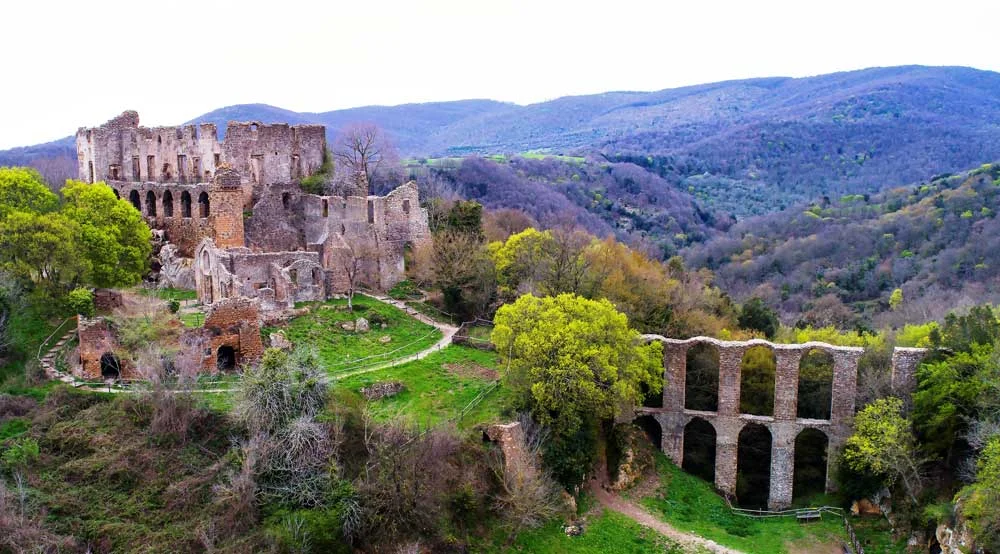
For centuries, the Lagotto worked alongside the vallaroli (marsh workers) in the vast lowlands of Comacchio and the marshes of Ravenna. Their primary role was waterfowl retrieval. The breed's distinctive rustic, woolly, and tightly curled coat was an essential adaptation, acting as a water-resistant layer that protected them in the freezing, wet conditions of the marshes.
From Waterfowl to Truffles
During the 19th century, drainage steadily transformed much of the marshland into farmland. As wetland hunting declined, the Lagotto’s work shifted toward searching for truffles in the Romagna countryside and hills. Truffle searching was already part of the local working tradition; over time it became the breed’s defining specialty.
An excellent nose, intelligence, and persistent search aptitude made the Lagotto well suited to detecting the scent of truffles hidden underground. Generations of selection favored dogs that stayed focused on the search rather than chasing game. Individual dogs can still have a prey drive. The Lagotto is distinctive as a breed specifically developed and recognized for truffle searching—not because other breeds cannot learn the job. That close cooperation between dog and handler remains one of its most appealing qualities.
Preserved in Italy: Recovery & Recognition
By the 1970s, the breed's identity was at serious risk. Hunters had begun crossbreeding the Lagotto with other dogs solely for working ability, threatening to dilute the pure lineage. Recognizing the danger of losing this historic Italian working dog, a dedicated group of enthusiasts and breeders in Italy initiated a concerted recovery effort.
Their stewardship led to the founding of the Club Italiano Lagotto in 1988, official recognition by the Italian Kennel Club (ENCI) in 1992, and provisional recognition by the Fédération Cynologique Internationale (FCI) in 1995. This is the documented story behind Italy’s protection of the breed: enthusiasts preserving its identity, working ability, and health through breed clubs, standards, and responsible breeding. Recognition should not be confused with a special protected-species designation or an export ban.
Desirable Qualities & Distinctive Traits
An Established Working Breed
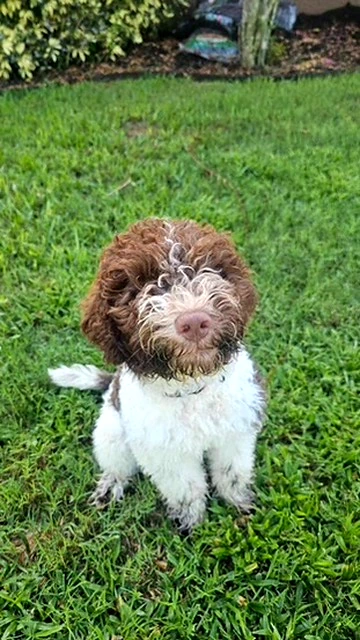
With their curly coats and expressive faces, Lagotti are sometimes mistaken for "doodle" crosses. The Lagotto Romagnolo is an established Italian working breed, not a modern designer cross. Its appeal is the combination of a recognizable rustic appearance, a purpose-bred nose, and a long partnership with people. A breed standard describes shared traits, while each dog still has its own personality.
The Rustic, Woolly Coat
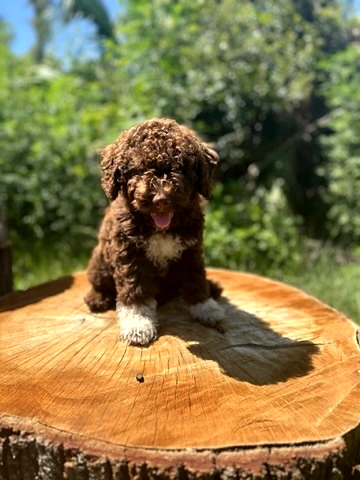
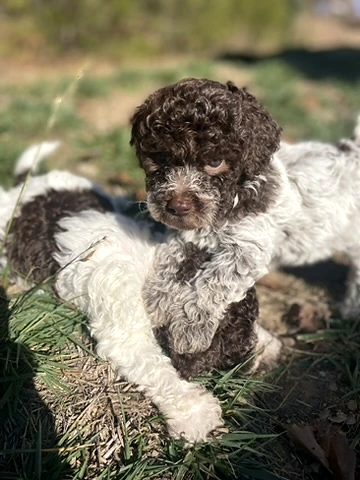
The hallmark of the breed is its dense, woolly, and tightly curled coat, complete with a water-resistant undercoat originally meant to repel freezing marsh waters. While they are considered low-shedding, no dog is entirely hypoallergenic. Furthermore, their hair grows continuously. To prevent painful matting and felting, their coat requires dedicated, regular grooming—it is by no means maintenance-free.
Athletic and Robust
They are sturdy, well-proportioned, small-to-medium-sized dogs. Typically, males stand between 43 to 48 centimeters (17-19 inches) at the withers and weigh 13 to 16 kilograms (28-35 lbs), while females are slightly smaller at 41 to 46 centimeters (16-18 inches) and 11 to 14 kilograms (24-31 lbs). Despite their compact size, they are powerful, athletic, and built for endurance.

Living with a Lagotto Romagnolo
For a family that enjoys doing things with its dog, the Lagotto offers an appealing combination: an affectionate companion at home and an enthusiastic partner for walks, training, and discovery outdoors. Many form close bonds with their people. The most rewarding match is a household that welcomes both the companionship and the needs of an intelligent working dog.
Active & Athletic
Daily walks, play, and exploration provide useful outlets, balanced with rest and exercise appropriate to the dog’s age and health. Their compact size makes them an appealing adventure companion, but not a low-effort pet. Without suitable outlets, some dogs may dig or bark excessively.
Mental Enrichment
Intelligent and responsive to positive reinforcement, they crave mental stimulation. Nose work, scent games, and ongoing training are just as crucial as a long walk. Even their natural truffle-finding talent requires structured training and local foraging permissions to utilize practically.
Family & Socialization
While they are deeply affectionate with their families, individual temperaments vary. It should not be assumed that every Lagotto will automatically be easygoing or inherently perfect with young children without dedicated, early socialization and boundary setting.
Taking the Next Step
Explore our health information and adoption process, and talk with us about temperament, screening records, and whether a Lagotto’s needs fit your household.
Authoritative Sources & Further Reading
The history of the Lagotto Romagnolo spans centuries and bridges the gap between ancient art and modern breed standards. Due to the age of the breed, many early depictions and texts require careful interpretation. When exploring the origins of the breed, it is important to distinguish between verifiable historical records (such as their documented work in the 17th-century marshlands) and artistic interpretations (such as Renaissance frescoes).
FCI Standard No. 298: Lagotto Romagnolo
The official standard maintained by the Fédération Cynologique Internationale, detailing the breed's origins in the Romagna sub-region, its transition from waterfowl retriever to truffle hunter, and its precise structural and temperamental requirements.
Lagotto Romagnolo Club of America (LRCA): Breed History
Drawing on the research of Dr. Giovanni Morsiani and the Club Italiano Lagotto, this comprehensive history explores the breed's ancestry from Etruscan times through the Renaissance, up to the modern preservation efforts of the 1970s.
American Kennel Club: Expert Advice
A detailed overview of the breed's specialization as the only recognized purebred truffle hunter, offering perspective on historical interpretations and the reality of their specialized scenting abilities.